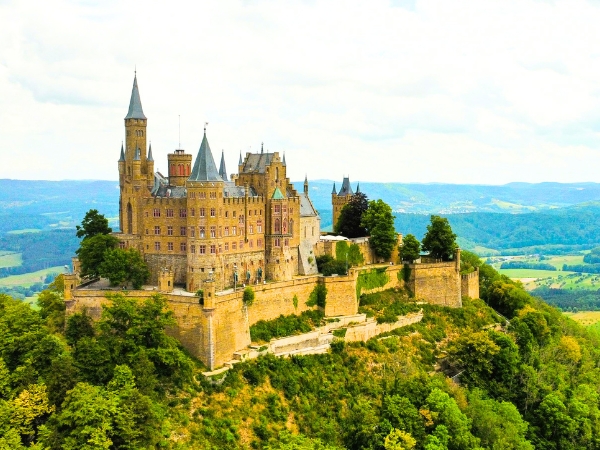
Germany boasts a blend of modern metropolises with timeless natural and historic landscapes. From the streets of Berlin and the financial hubs of Frankfurt to the fairytale castles of Bavaria and the misty stretches of the Black Forest, the country offers an incredible array of destinations for every type of traveller.
However, when planning a journey through this Central European gem, one fundamental question arises: should you drive a rental car or rely solely on public transport? Choosing how to travel around the country can significantly shape your overall travel experience.
Deciding whether to rent a car in Germany or ride public transit depends heavily on your travel goal and preferences. This guide provides a detailed breakdown of your options, weighing the benefits and challenges of various transport methods alongside a deep dive into car rentals to help you make an informed decision.

Before you decide to rent a car in Germany, it is worthwhile examining the alternative modes of transportation available across the country. Each option comes with distinct benefits and challenges, which you should weigh in relation to your travel style, budget, and itinerary.
Long-distance bus services offer an amazing alternative for moving between regions. Their greatest advantage is affordability. Ticket prices remain low even when booked on short notice, making them an ideal choice for budget-conscious travellers or students. Buses cover an impressive network that includes smaller towns alongside major tourist hubs, and modern coaches feature comfortable seating, power sockets, and onboard toilets.
The trade-off, however, lies in journey duration and reliability. Buses are vulnerable to highway congestion, accidents, and roadworks, leading to unpredictable travel times. Multi-hour coach trips can also feel significantly more restrictive and tiresome than moving freely around a train carriage or driving your own vehicle.
The German national railway operates an extensive and highly sophisticated rail network across the country. High-speed, intercity-express trains connect major hubs at speeds of up to 300 kilometres per hour, making rail travel the most popular choice for urban transit. Aside from speed, the network boasts unmatched efficiency. Main train stations are typically situated right at the heart of major towns, allowing you to bypass city traffic and arrive steps away from hotels and attractions. Furthermore, trains are eco-friendly, spacious and equipped with amenities such as dining cars, restrooms, and Wi-Fi.
However, train travel comes with a few drawbacks. Ticket prices can be steep unless booked well in advance, and the network has suffered from increased delays, cancellations, and engineering works in recent years. Additionally, while trains effortlessly link urban centres, reaching remote villages or specific hiking trailheads in rural regions often requires multiple transfers onto local buses.
Within German cities, public transport systems are exceptionally punctual, clean, and comprehensive. Urban transit systems allow travellers to navigate cities smoothly without worrying about directions or parking. Cycling is equally popular, supported by dedicated bike lanes and rental schemes in almost every town.
Nevertheless, these modes of transport are designed strictly for localised travel. Relying solely on urban transit means your scope is confined to a specific metropolitan hub. Additionally, managing heavy luggage across crowded platforms during peak hours can prove challenging, especially when you are travelling with family.
Air travel within Germany provides direct links between distantly spaced major hubs, such as flights between Frankfurt and Berlin. While the actual flight time between cities is brief, domestic flights are rarely the most practical choice. Once you factor in travel times to and from out-of-town airports, security checks, baggage drop-offs, and potential airport delays, flying seldom saves time compared to high-speed rail. Additionally, short-haul flights carry a heavy environmental footprint and are generally considered an inefficient way to navigate a country with such robust ground transit infrastructure.

For many international tourists, choosing to rent a car in Germany unlocks an array of benefits that public transport simply cannot match.
Renting a car in Germany offers the ultimate freedom to create your own schedule and itinerary. Having your own ride liberates you from fixed timetables, limited routes, missed connections, and transport delays. You can start your day whenever you wish, stop spontaneously to take photographs at a scenic viewpoint, or relax at a rural cafe without monitoring your clock.
While public transport excels at connecting major cities, the true magic of Germany often lies in its rural countryside, alpine valleys, and historic villages. Having a personal vehicle gives you access to secluded fairytale castles along the Romantic Road, explore the winding paths of the Saxon Switzerland National Park, or tour smaller wine regions along the Moselle River that are inconvenient or impossible to reach via public transit.
For driving enthusiasts, Germany boasts the famous Autobahn, parts of which feature unrestricted speed zones where tourists can experience high-speed cruising legally and safely. Beyond fast highways, the country also features world-renowned themed routes. Journeys along the Romantic Road, the Black Forest High Road, or the German Alpine Road reveal picturesque timber-framed towns, sweeping panoramas, and lush forests best appreciated from behind the wheel.
Travelling with family members, friends, or substantial luggage is markedly easier in a private vehicle. Loading bags into a trunk once eliminates the hassle of dragging suitcases through train or bus stations. Furthermore, when travelling with a group of three or more people, the combined cost of individual train or bus tickets often exceeds the daily cost of a car rental and fuel, making driving a budget-friendly alternative.
Despite the clear benefits, driving in Germany is not without its challenges. Understanding these potential obstacles ensures you are fully prepared for navigating the country’s roads.
While renting a vehicle can be economical for groups, it introduces several fixed and variable expenses for solo travellers or couples. Alongside the daily base rate, you have to pay for insurance coverage, local taxes, environmental fees, toll charges, and other rental expenses. You should carefully review your rental agreement to check the total cost breakdown and determine which items are mandatory and which ones can be skipped.
Driving inside historical German city centres can be stressful. Streets are often narrow, filled with tram lines, and heavily populated by cyclists and pedestrians who have the right of way. Finding parking is notoriously difficult and expensive, with parking garages charging high hourly rates. Furthermore, many German cities enforce Environmental Zones, which require vehicles to display a specific emissions sticker to enter legally. Drivers who fail to display these stickers and break speed limits face fines enforced by automated traffic cameras.
Driving in a foreign country introduces operational and navigational challenges. In Germany, drivers must strictly adhere to local road rules, such as keeping to the right lane on highways and yielding to traffic coming from the right at unmarked intersections. If you are travelling during winter, the law dictates that vehicles must be equipped with winter or all-season tyres during icy conditions, potentially adding surcharges to your rental agreement.

Is it cheaper to rent a car in Germany or ride the train? It depends on the size of your travel party and how early you book your journey. Solo travellers and couples will often save money using pre-booked rail passes, whereas families or groups often find that sharing car rental and fuel costs is cheaper than buying multiple train tickets.
Is it worth renting a car just to drive on the Autobahn? For some drivers, experiencing the Autobahn and its unrestricted speed zones can be a thrilling adventure. However, you should not rent a vehicle solely for high-speed driving, as large portions of the highway network still enforce strict speed limits.
Is it worth renting a car in Germany for exploring only cities? No, renting a vehicle is generally unnecessary if your trip is limited to urban centres like Berlin, Munich, or Frankfurt. High-speed trains connect city hubs effortlessly, while driving within these areas presents heavy traffic, parking hurdles, and additional costs.
Is it worth renting a car in Germany for reaching rural areas? Yes, having a rental vehicle is undoubtedly worth it if you plan to explore rural countryside, nature reserves, or famous driving routes. Public transport to these remote destinations can be limited, whereas a car gives you easy access and schedule flexibility.
Is combining train rides and car rentals a good hybrid tactic? Yes, combining both transit modes is often the smartest and most balanced way to experience the country. You can use high-speed trains to travel comfortably between major hubs, then book a rental car specifically for the days you plan to explore the rural regions.
Deciding what transportation mode you will use in Germany ultimately comes down to the nature of your trip. If your itinerary focuses predominantly on exploring major metropolitan hubs, relying on Germany's exceptional bus and rail network is the most straightforward and economical choice. Public transport takes you directly from centre to centre without the hassle of heavy urban traffic, mandatory environmental permits, or costly parking spaces.
Conversely, if your dream German vacation involves scenic road trips through alpine passes, exploring quiet Bavarian villages, touring romantic castles, or venturing deep into rural nature reserves, choosing to rent a car in Germany is undoubtedly worth the investment. A private vehicle provides total freedom and flexibility, and direct access to remote regions public transport simply cannot reach.
For many travellers, a hybrid approach yields the perfect balance: utilise the high-speed rail network to move efficiently between major cities, and then rent a car to explore the surrounding countryside. If you choose to get behind the wheel, it is best to book your rental car today and prepare for an unforgettable journey through the heart of Germany.